An Unrecognised Long Barrow near Whitsbury, Hampshire?

by Michael Gill

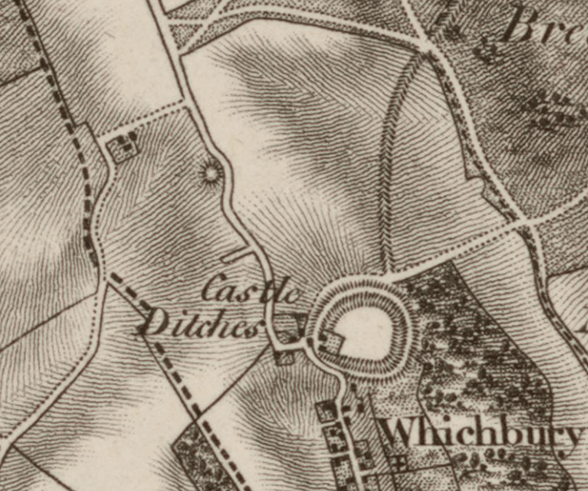
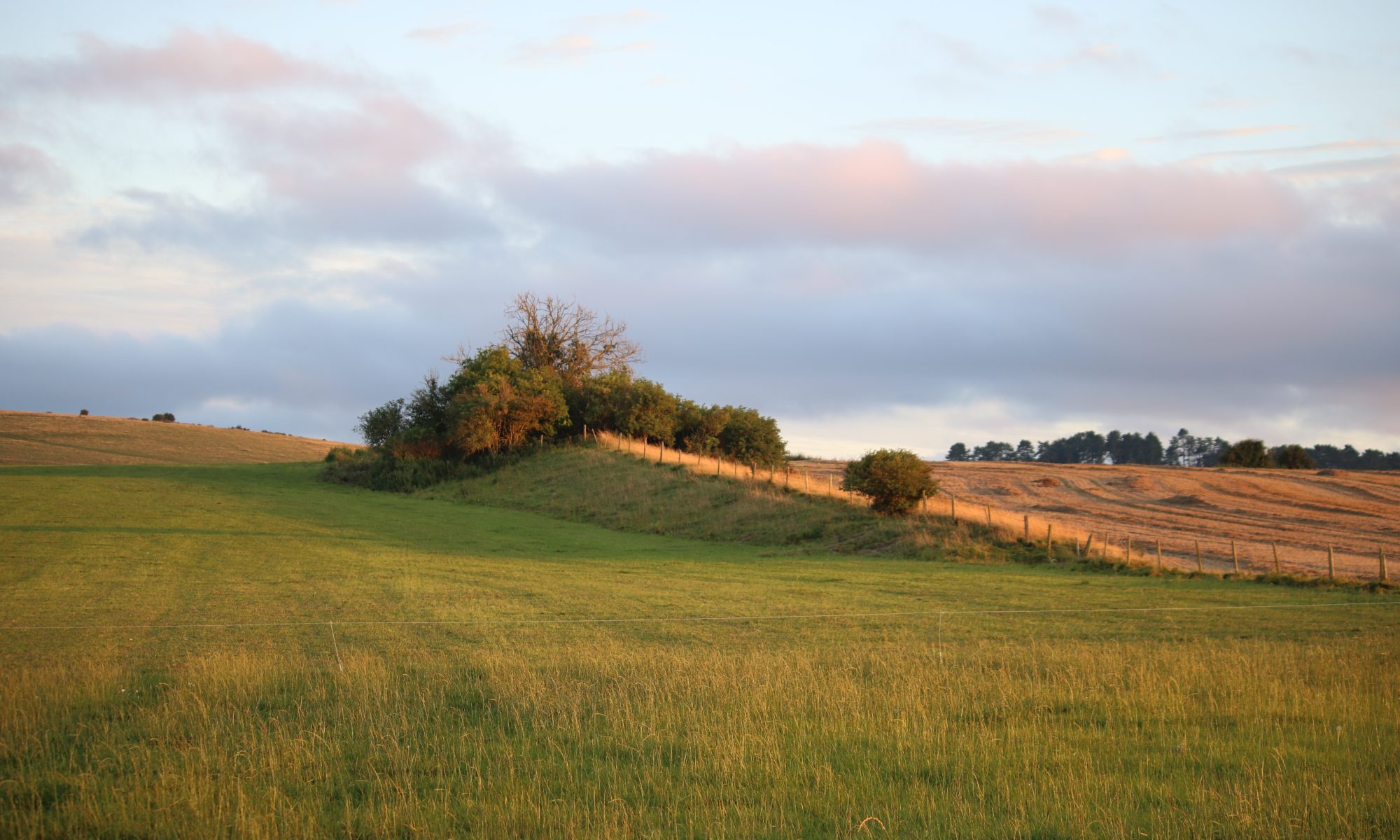
The rolling chalkland of Cranborne Chase has a rich variety of Neolithic monuments, including a dense concentration of long barrows clustering near the Dorset Cursus. This region has long attracted the attention of antiquaries and archaeologists, and as a result is one of the most closely studied prehistoric landscapes in Britain. Consequently, it could be assumed that the most significant Neolithic monuments have already been located and studied. This, however, is far from the truth, with, for example, a number of long barrows and a long enclosure being revealed by aerial imagery and geophysical survey in recent years (Gill 2018, 2023; Gill & Field 2019). One of these long barrows has been shown to be an amazing 112 metres long, and despite being ploughed out, still possesses a spread mound of considerable bulk. The intensification of farming on the downs of Cranborne Chase inevitably led to the destruction of many earthwork monuments, and a careful review of historic maps, LiDAR, and aerial imagery can still lead to new discoveries. This is the case with a probable long barrow at Whitsbury, the mound of which was destroyed in the 19th Century. Since then, it has been hiding in plain sight, potentially being mis-interpreted and recorded as the site of a round barrow.

Continue reading “An Unrecognised Long Barrow near Whitsbury, Hampshire?”

An Unrecorded Long Barrow near Morestead, Hampshire

Cropmarks showing an unrecorded long barrow at Morestead Hampshire

by Michael Gill

This article can be accessed / cited here: https://doi.org/10.5281/zenodo.17265581 and is available for download as a PDF at the end of this article.

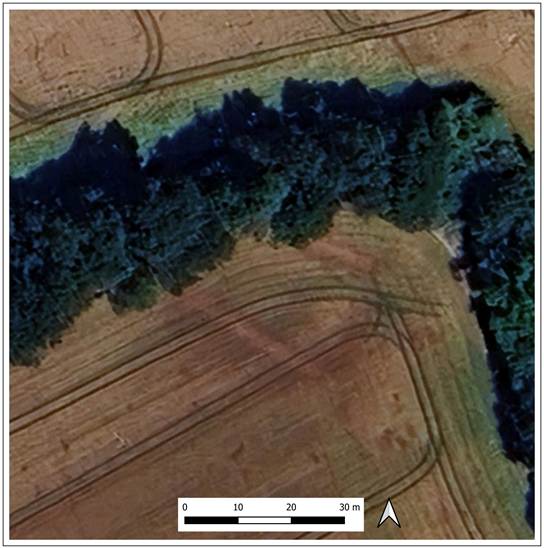
Even though Neolithic long barrows are relatively rare, particularly in comparison to Bronze Age round barrows, new discoveries are on occasion made. It is often a specific combination of weather conditions and type of crop that can lead to clear cropmarks appearing for a short period of time, and this was the situation in 2025, when distinct cropmarks over wide areas were revealed in satellite imagery. Such cropmarks in the parish of Owlesbury near Winchester revealed a previously unrecorded long barrow, just 300m from another long barrow.

The cropmarks of this unrecorded long barrow are 1.2km east south-east of Morestead, a village about 5km south-east of Winchester in Hampshire. The cropmarks (Figure 1), which I spotted recently on Google Earth, clearly show the characteristic flanking ditches of a long barrow, which run almost parallel but taper slightly, with the wider end towards the south-east.

Continue reading “An Unrecorded Long Barrow near Morestead, Hampshire”

Unrecognised as the longest long barrow in Hampshire? The Warren Farm long barrow at Morestead

by Michael Gill

This article can be accessed / cited here: https://doi.org/10.5281/zenodo.16921973 and is available for download as a PDF at the end of this article.

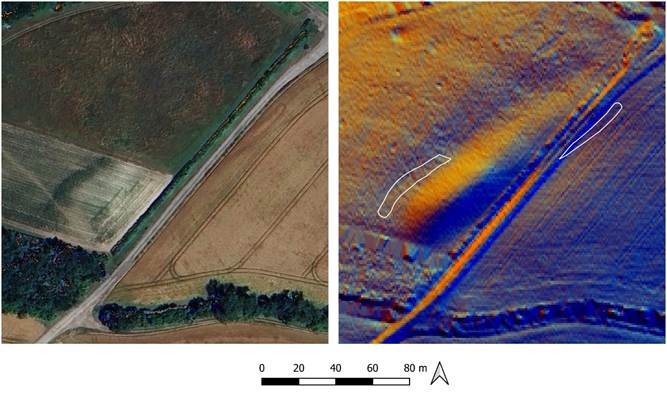
Although long barrow discoveries are still being made, it is fair to say that the most substantial examples have probably already been recorded. It is also the case, however, that existing monuments can sometimes pass under the radar, evading detailed study and being unrecognised for their true importance. This could be the case for the Warren Farm long barrow at Morestead, 5km south-east of Winchester, which is recorded as a fairly standard monument, 60m in length. Incredibly, recent evidence from LiDAR and aerial imagery suggests that this long barrow may be over twice its recorded length, perhaps a massive 135m, making one of the longest long barrows in southern England.

Continue reading “Unrecognised as the longest long barrow in Hampshire? The Warren Farm long barrow at Morestead”