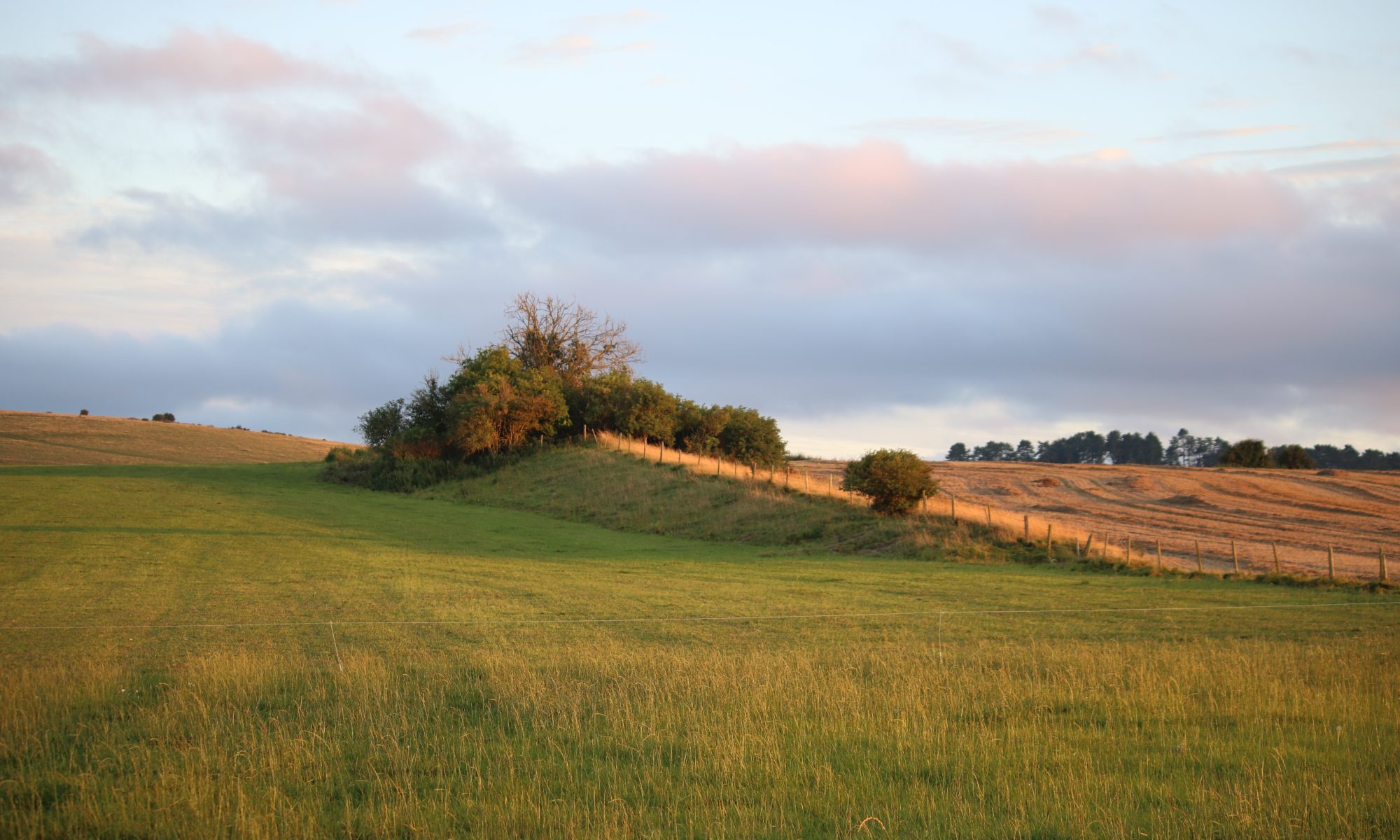
Three Possible Unrecognised Long Barrows near Preston Candover, Hampshire

by Michael Gill

This article can be accessed / cited here: https://doi.org/10.5281/zenodo.19005909 and is available for download as a PDF at the end of this article.

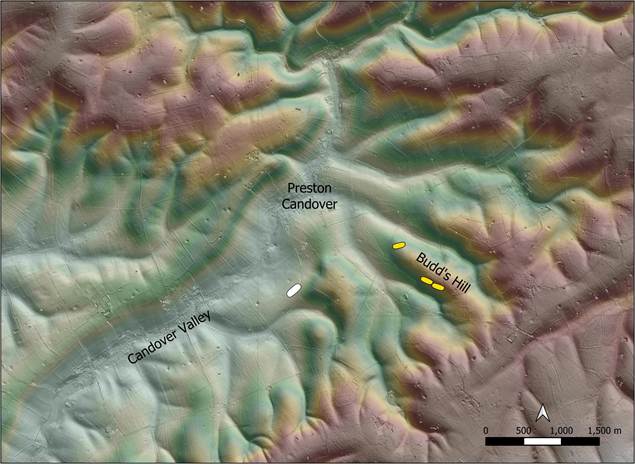
The Candover Valley, a few kilometres south of Basingstoke, has long been recognised for its prehistoric remains and potential for further discoveries (Shore 1893). At Preston Candover, this is attested by the presence of a much denuded Neolithic long barrow (RCHME 1979: 14–15), numerous ring ditch cropmarks and a significant scatter of flint artefacts at Budd’s Hill (Williams-Freeman: 357–58). This article discusses three possible unrecorded long barrows located close to the latter site, revealed through analysis of publicly available aerial imagery.

Continue reading “Three Possible Unrecognised Long Barrows near Preston Candover, Hampshire”
An Unrecognised Long Barrow near Whitsbury, Hampshire?

by Michael Gill

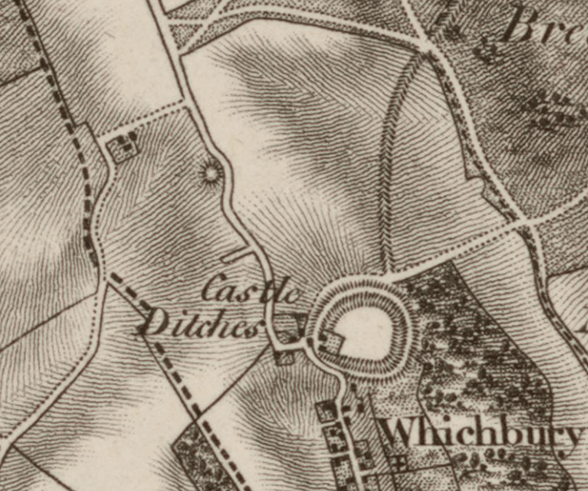
The rolling chalkland of Cranborne Chase has a rich variety of Neolithic monuments, including a dense concentration of long barrows clustering near the Dorset Cursus. This region has long attracted the attention of antiquaries and archaeologists, and as a result is one of the most closely studied prehistoric landscapes in Britain. Consequently, it could be assumed that the most significant Neolithic monuments have already been located and studied. This, however, is far from the truth, with, for example, a number of long barrows and a long enclosure being revealed by aerial imagery and geophysical survey in recent years (Gill 2018, 2023; Gill & Field 2019). One of these long barrows has been shown to be an amazing 112 metres long, and despite being ploughed out, still possesses a spread mound of considerable bulk. The intensification of farming on the downs of Cranborne Chase inevitably led to the destruction of many earthwork monuments, and a careful review of historic maps, LiDAR, and aerial imagery can still lead to new discoveries. This is the case with a probable long barrow at Whitsbury, the mound of which was destroyed in the 19th Century. Since then, it has been hiding in plain sight, potentially being mis-interpreted and recorded as the site of a round barrow.

Continue reading “An Unrecognised Long Barrow near Whitsbury, Hampshire?”