by Michael Gill
This article can be accessed / cited here: https://doi.org/10.5281/zenodo.17265581 and is available for download as a PDF at the end of this article.
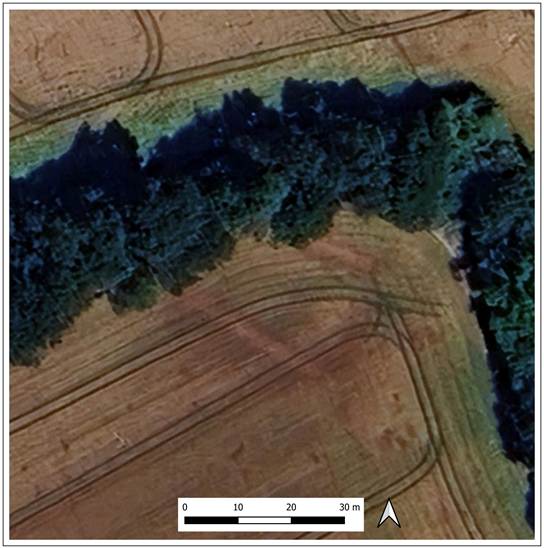
Even though Neolithic long barrows are relatively rare, particularly in comparison to Bronze Age round barrows, new discoveries are on occasion made. It is often a specific combination of weather conditions and type of crop that can lead to clear cropmarks appearing for a short period of time, and this was the situation in 2025, when distinct cropmarks over wide areas were revealed in satellite imagery. Such cropmarks in the parish of Owlesbury near Winchester revealed a previously unrecorded long barrow, just 300m from another long barrow.
The cropmarks of this unrecorded long barrow are 1.2km east south-east of Morestead, a village about 5km south-east of Winchester in Hampshire. The cropmarks (Figure 1), which I spotted recently on Google Earth, clearly show the characteristic flanking ditches of a long barrow, which run almost parallel but taper slightly, with the wider end towards the south-east.
Continue reading “An Unrecorded Long Barrow near Morestead, Hampshire”
 Unearthing Long Barrows