This article can be accessed / cited here: https://doi.org/10.5281/zenodo.20090746 and is available for download as a PDF at the end of this article.
Michael Gill, May 2026
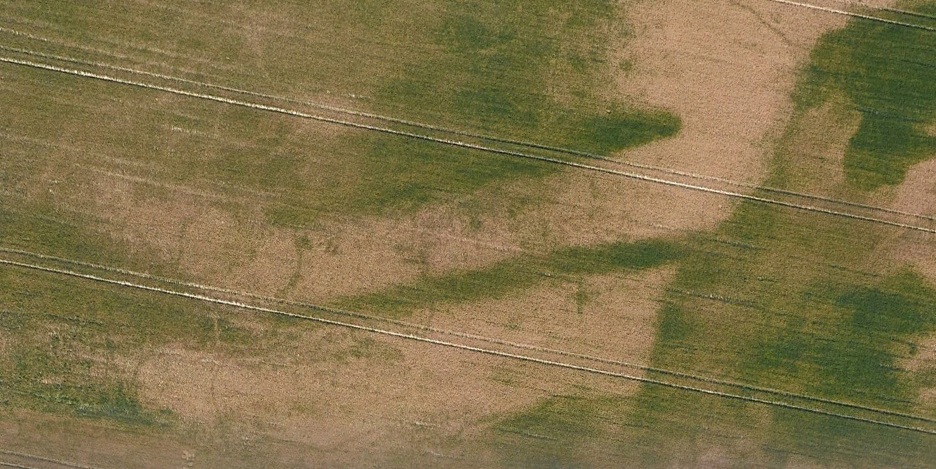
The Neolithic long barrows of the chalk downs of Sussex have long been the subject of detailed study (Toms 1922; Curwen & Curwen 1925; Grinsell 1930, 1934). Earlier studies tended to concentrate on the monuments with upstanding earthworks, and these were complemented with further examples revealed from cropmarks on aerial photographs (Carpenter et al. 2026: fig. 13; 155), or from geophysical survey in advance of development (Lefort 2012). Given such a long tradition of study, it might be thought that most of these relatively rare monuments have been discovered, with any missing examples irrevocably lost through modern development. However, the explosion of publicly available satellite and aerial imagery during the last twenty years has provided a set of data that, with careful review, can add further examples which might only be briefly revealed under perfect crop and meteorological conditions. Such is the case with an example recently discovered by the author in the parish of Southbourne, West Sussex, close to the border with Hampshire. This apparent long barrow is a substantial 80m in length and given the clarity of the cropmarks, it is amazing it has escaped detection for so long.
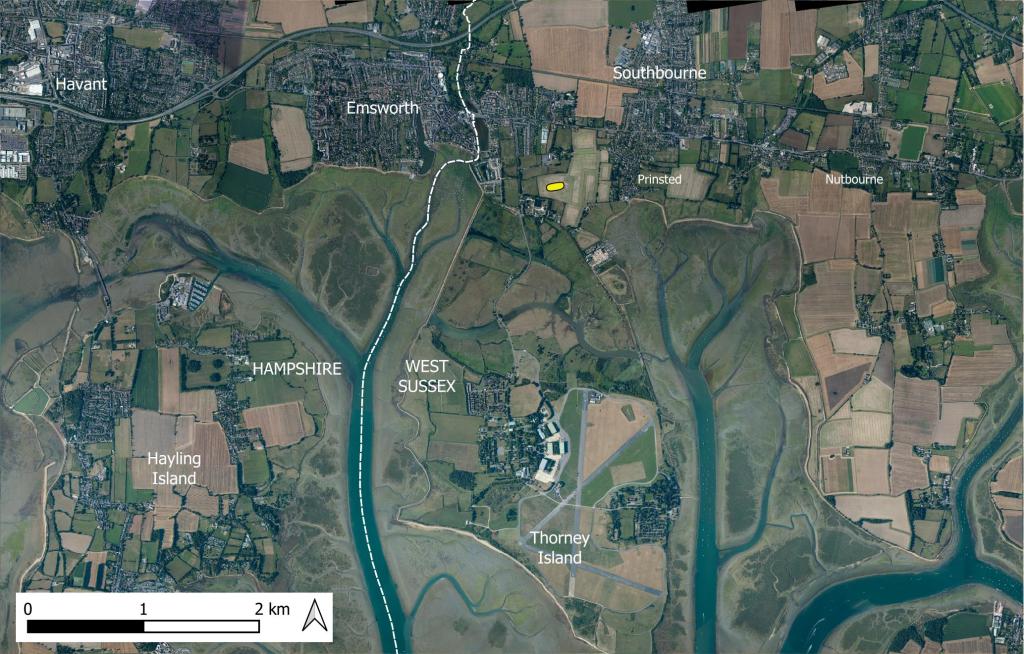
Figure 1: Location of the recently discovered long barrow in the parish of Southbourne (indicated with a yellow symbol). Contains public sector information licensed under the Open Government Licence v3.0.
This long barrow is located just north of Thorney Island, one kilometre south-east of Emsworth (Hampshire) and 500 metres west of the hamlet of Prinsted (West Sussex), as shown in Figure 1. It is centrally positioned on a narrow neck of land between the heads of two of the numerous marine inlets that characterise the coastline in this part of southern England.
Continue reading “A Recently Discovered Long Barrow near Southbourne, West Sussex” Unearthing Long Barrows